Your guide to commuting to Manhattan from the suburbs

Is it worth the commute? That’s the big question for thousands of people who enjoy the space, quiet, and affordability of suburban living but work in the hustle and bustle of Manhattan. Commuting to Manhattan from the suburbs is a daily reality for many. Some love it, some tolerate it, and others wonder if it’s time to make a change. In this guide, we’ll dive into what it really means to live in the suburbs while working in the city. We’ll explore the pros and cons, share tips to make your commute easier, and even touch on smart solutions like on demand storage NYC locals rely on to help you manage the lifestyle. Whether you’re already making the trip or just thinking about it, we’ll help you decide: is the commute really worth it?

Commute breakdown: what to expect by train, bus, or car

When commuting to Manhattan from the suburbs, your experience can vary quite a bit depending on how you travel. Let’s break down what you can typically expect when taking the train, bus, or driving by car. We’ll look at average commute times, costs, and how reliable each option really is.

By train

Trains are the go-to option for many suburban commuters. Services like NJ Transit, Metro-North, and the Long Island Rail Road (LIRR) offer fairly direct routes into Manhattan.

  • Average commute time: 45–90 minutes, depending on distance and connection times

  • Monthly pass: $200–$400

  • Reliability: Generally good, though occasional delays do happen, especially during rush hour or bad weather

Many commuters love the train for its predictability and the chance to relax, read, or even work during the ride.

By bus

Buses can be a convenient and cost-effective way to get into the city, especially from areas like New Jersey or Westchester.

  • Average commute time: 60–90 minutes

  • Monthly pass: Around $150–$300

  • Reliability: Varies—buses are more prone to traffic delays, particularly during peak times or if there’s a backup at the tunnel or bridge

While buses are less predictable than trains, they can be a solid option if you live near a direct route.

By car

Driving gives you the most flexibility, but it also comes with the most variables.

  • Average commute time: 60–120 minutes (or more with traffic)

  • Cost: Gas, tolls, parking—easily $500+ a month

  • Reliability: Low during rush hour; traffic can be heavy and unpredictable

Parking in Manhattan can be a major hassle (and expensive). That is why some people use business storage NYC companies recommend to keep items close without needing to haul them back and forth from the suburbs.

Each commute option has its pros and cons, and what works best often depends on where you live and how much flexibility you have. The key is finding the right balance between time, cost, and convenience.
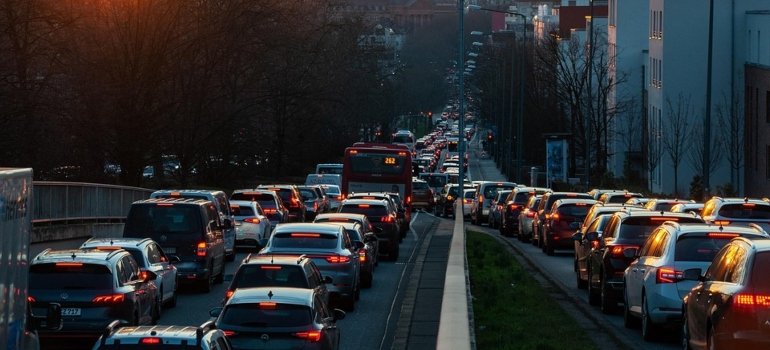
A traffic jam on a street, one of the reasons why commuting to Manhattan from the suburbs is worth it.
Each type of commute has its advantages and disadvantages, but what works best depends on where you live and how flexible you are.

Storage tips for commuters with limited home space

Living in the suburbs often means more space than a city apartment, but not always. If you’re renting a smaller place, sharing with roommates, or just trying to keep things tidy while juggling work in the city, smart storage solutions can make all the difference.

NYC apartment storage can be a great option if you find yourself hauling items back and forth or need a place to keep seasonal clothes, sports gear, or work supplies. Instead of cluttering your car or cramming everything into your bedroom, renting a small storage unit near your office or transit stop can help you stay organized and stress-free.

If you work or travel through uptown Manhattan, storage units Harlem residents use are a convenient and affordable solution. You can store items you don’t use daily but still want nearby—like business attire, extra shoes, or supplies for city-based hobbies. This keeps your suburban home clear and your work life running smoothly.

For even closer access, storage East Harlem residents recommend puts you just minutes from major subway lines and bus routes. It’s especially useful for commuters who live farther out but want a “city locker” to lighten their load. Whether it’s a quick wardrobe change or dropping off your gym bag, local storage adds flexibility to your routine without taking over your living space.

With the right storage strategy, you can enjoy suburban living while keeping your city work life organized and clutter-free.

A box with toys and a Christmas tree.
Keep your city life organized and, if you are commuting to Manhattan from the suburbs, use storage solutions.

Financial trade-offs: rent vs. transit costs

One of the biggest questions commuters face is whether the money saved on lower suburban rent is worth the cost—and time—of getting into Manhattan every day. It’s a tricky balance, and the answer depends a lot on your priorities and lifestyle.

In the suburbs, rent is usually more affordable. You might find a spacious two-bedroom for what a studio would cost closer to the city. But once you factor in monthly train or bus passes, gas, tolls, and parking, your commuting costs can quickly add up. Sometimes they can reach $500 or more each month. Over time, that eats into your savings and adds to daily stress.

On the other side, moving closer to Manhattan can mean sky-high rent. However, this means less spent on transit and more hours in your day. If you’re considering making the move but don’t want to sacrifice too much space, using storage Lower Manhattan locals usually rent can be a smart way to make a smaller apartment more livable. You can rotate seasonal items or store bulkier things nearby without cluttering your space.

Even if you’re staying put in the suburbs, having access to Manhattan storage NYC residents trust can give you flexibility without the full-time cost of city living. It’s especially helpful if you work long hours or need to keep city-based items—like work files, clothes, or gear—nearby but out of your way at home.

In the end, it’s about finding the right mix. For some, the peace and space of the suburbs are worth the daily commute. For others, saving time and staying closer to work makes more sense. It does not even matter if it means downsizing and getting creative with storage.


A person holding a fan of money.
Although the rent is more affordable in the suburbs, your commuting costs can quickly increase without you noticing it.

Lifestyle considerations: family, space, and sanity

Money isn’t the only factor when thinking about commuting to Manhattan from the suburbs. Lifestyle plays a huge role. That is specifically the case if you think about things like family needs, personal space, and overall well-being.

In the suburbs, you often get more space for your money—yards, multiple bedrooms, and quieter neighborhoods. This is a big plus for families with kids or anyone who values room to breathe. You might have access to better schools, local parks, and a slower pace of life that helps you recharge after busy days in the city.

On the other hand, living closer to Manhattan means cutting down your commute and having more time in your day. This is the time you might otherwise spend in traffic or on a crowded train. If you enjoy spontaneous dinners out, cultural events, or being able to run errands quickly, city life definitely has its perks.

The choice often comes down to apartments vs. houses in NYC. In Manhattan, most people live in apartments. They are often smaller, with less privacy and limited storage. In contrast, suburban living typically means having an entire house, a backyard, and maybe even a home office or playroom.

Still, some city dwellers are happy to trade space for convenience. This is especially true if they don’t have kids or prefer a faster-paced lifestyle. Ultimately, it’s about what keeps your life balanced. It does not matter if that’s peace and quiet with a commute, or high energy with everything at your fingertips.

A group of women laughing and talking about commuting to Manhattan from the suburbs.
It is not only money that influences your commuting to Manhattan from the suburbs, but also the type of lifestyle you are living.

Moving closer: when relocation starts making more sense

There comes a point when the long commute stops being manageable and starts taking a real toll. It affects your time, your health, and even your relationships. If you’re finding yourself constantly stressed, missing out on family time, or simply too tired to enjoy your evenings, it might be time to ask: is it smarter to just move closer?

Relocation begins to make more sense when your daily commute exceeds two hours round-trip. This is especially true if you’re doing it five days a week. That’s ten hours a week spent in transit. The time you could be spending with your kids, at the gym, or even just getting more sleep. Over the long term, that kind of routine can lead to burnout.

You might also consider moving if your job has become more demanding. This means requiring late nights or early mornings. Living closer gives you more flexibility and reduces the stress of having to plan your life around train schedules or traffic. If you’re paying high transit costs and still feeling exhausted, those funds might be better spent on slightly higher rent in exchange for a better quality of life.

For some, the turning point comes when personal needs change. That is if you are starting a family, needing to care for a loved one, or simply craving more time for yourself. When your commute starts interfering with your lifestyle and well-being, relocating closer to Manhattan—even if it means adjusting to a smaller space—can be the right move. With the right planning (and maybe a little help from smart storage options), city life can become both manageable and rewarding.

A communter in a car while commuting to Manhattan from the suburbs.
If you spend ten or more hours traveling to and from work, think about how smarter you can spend this time.

Flexible storage for movers-in-transition

You’re thinking about commuting to Manhattan from the suburbs but aren’t quite ready to commit long-term. Short-term storage can be a lifesaver. Whether you’re testing out city living, waiting for a new lease to start, or simply trying to downsize from a house to an apartment, having a flexible storage option gives you room to breathe. This means both literally and mentally.

Short-term storage is especially useful during the adjustment phase. You don’t have to make hard decisions about what to keep or toss right away. Instead, you can store extra furniture, seasonal items, or anything you’re not sure you’ll need immediately. That way, your smaller city space stays livable while you figure out what works.

For example, you’re settling into a neighborhood like the Upper West Side. Storage units Upper West Side offer convenient access to your belongings without crowding your new apartment. You can grab what you need, when you need it, without hauling things in from the suburbs or paying for a larger, more expensive place just to fit everything.

For movers-in-transition, the flexibility of short-term storage means you can explore city life at your own pace. You don’t have to feel the pressure of having it all figured out on day one.

A group of yellow lockers.
Short-term storage can be a solution if your decision about moving to Manhattan is not definite.

Final advice from storage experts

Commuting to Manhattan from the suburbs is a lifestyle choice that comes with both rewards and challenges. It does not matter if you’re sticking with the daily train ride, thinking about downsizing, or considering a full move into the city. It’s important to plan in a way that supports your daily routine and long-term goals.

Our advice? Stay flexible. If you’re not ready to commit to a big change, try adjusting your schedule or testing out short-term storage to see what works best. If you’re leaning toward moving closer to work, make the most of space-saving solutions to ease the transition. Also, it absolutely does not matter where you live. Using local storage can help you stay organized, reduce stress, and make your home life more comfortable.

From managing time to managing clutter, the key is finding balance. The right mix of commute, space, and convenience can make a huge difference in how you feel every day—on the train, at work, and at home.

Reviews

Pavel Nikolskii

Pavel Nikolskii

a month ago

review rate

This is my first experience renting a mini storage unit. I really liked it. Clean, quiet, calm, warm. There are convenient places to unload the car. Convenient access from the street. There is also a ramp for a cart. There are several spacious elevators. All elevators are clean and work. The storage unit itself has wooden flooring. Not far from the subway station. The polite employee patiently explained to me everything I wanted to know. Answered all my questions. Showed me several different storages. Explained the pricing. I am happy that I finally have a good place to store my things.

Storage Rental NYC  Made Easy

Contact Us